Scalping and Broker Cost: Why the Table Matters More
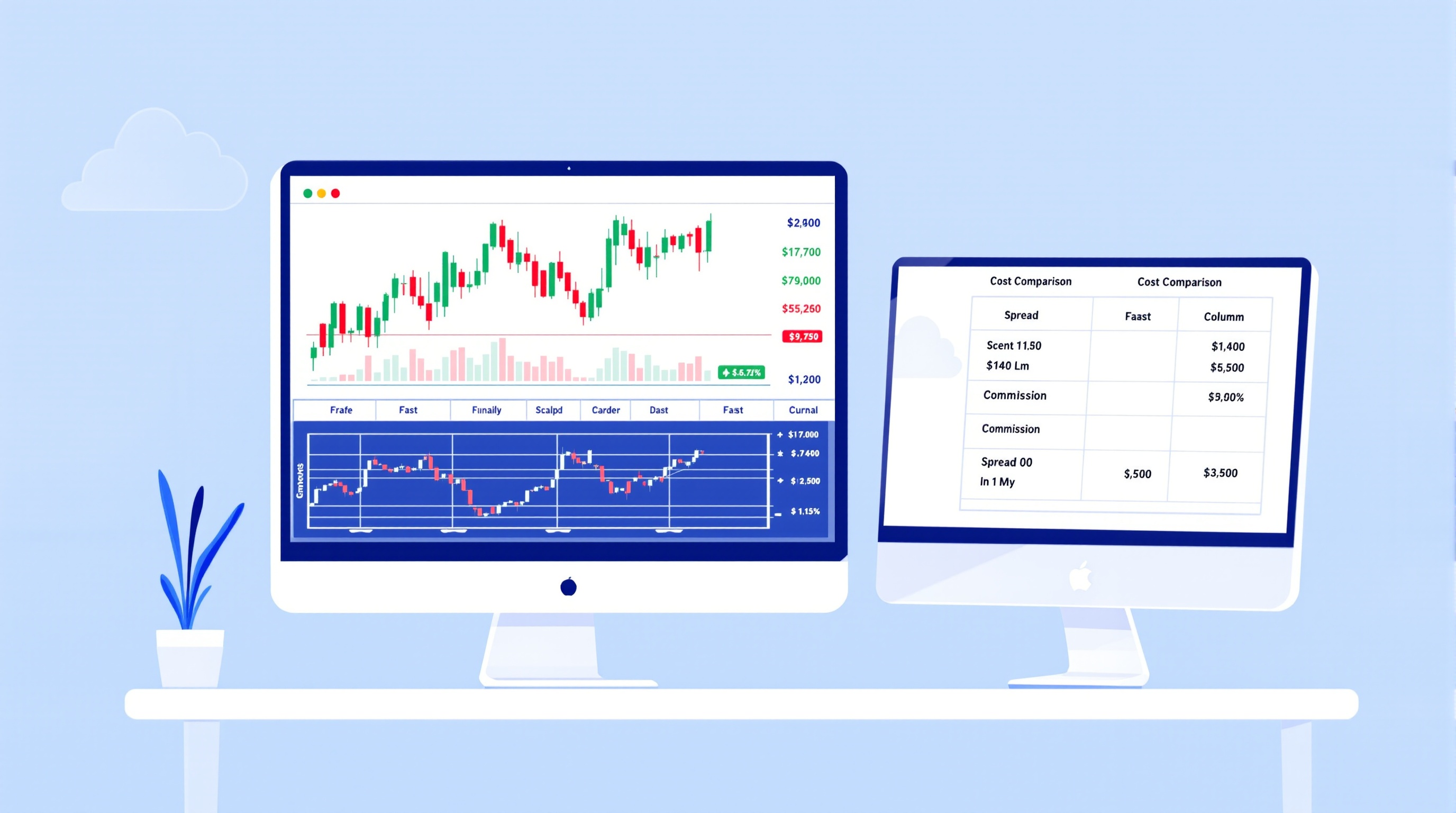
Scalping and broker cost are two sides of the same coin: you can have the sharpest one-minute setup in the world, but if the spread and commission eat more than your average win, the strategy is broken before you place a trade. Most scalpers spend weeks perfecting entries and almost no time reading the cost table that actually determines whether those entries can ever be profitable.
Why Scalping Amplifies Every Cost
Scalping means taking many small trades with tight profit targets, often 3-10 pips. That structure makes cost the dominant variable in your results, for a simple reason: costs are fixed per trade, but your target is tiny.
Consider what happens as your target shrinks:
- A 20-pip swing trade barely notices a 1-pip spread — it's 5% of the target.
- A 5-pip scalp facing the same 1-pip spread loses 20% of the target before the market even moves.
- Add a commission on top, and a "5-pip win" might really need the market to move 6-7 pips just to break even.
This is why the same strategy can be profitable on one broker's pricing and a loser on another's, with identical entries and exits. The setup didn't change. The table did.
Scalpers also trade far more frequently than swing traders, so any per-trade cost gets multiplied by volume. A 0.3-pip difference in average spread might look trivial on paper, but across 40 trades a day it compounds into a meaningfully different monthly result. This is precisely why we built the [cost audit tool](/audit.html) — to make that multiplication visible before it shows up in your equity curve.
Spread vs Commission: Read the Whole Table
Brokers price scalping accounts in different structures, and comparing headline numbers alone is misleading. You need to look at the full package:
| Account type | Typical spread | Commission | What to check | |---|---|---|---| | Standard | Wider, often "zero commission" | None | Spread may vary more in volatile sessions | | Raw/ECN | Tighter, near-raw interbank | Per-lot fee | Total cost = spread + commission, not spread alone | | Swap-free/Islamic | Varies | Varies | Check if spread is widened to compensate |
A raw spread account can look cheap until you add the commission line, and a "zero commission" standard account can be more expensive once you measure the real spread during your trading hours. Neither number alone tells you the cost of the strategy — only the total does.
This is exactly what platforms like Pepperstone and IG structure differently across their account tiers, and it's why we never quote a single "cheapest" figure in isolation. Always check current, live pricing on the [brokers page](/brokers/index.html) and run your own numbers through the [audit tool](/audit.html) rather than relying on marketing pages.
Slippage and Execution: The Hidden Line in the Table
Spread and commission are the visible costs. Slippage is the invisible one, and it hits scalpers hardest because their targets are so small.
Key things to check with any broker before scalping live:
- Execution model — market execution vs instant execution can behave differently around news
- Requotes — should be rare or non-existent on true ECN/STP accounts
- Server location and ping — a VPS near the broker's server can materially cut latency
- News-time behaviour — spreads on many accounts widen sharply around high-impact releases
None of this shows up in a marketing table of "average spreads." It shows up in your fill reports. If you're serious about scalping, request or review historical execution data, not just advertised averages. Pepperstone's and IG's own platform comparisons (their own MT4/MT5 vs proprietary platforms) are a useful starting point for understanding how execution can differ even within the same broker.
Swap and Overnight Cost — Usually Irrelevant, But Check
Most scalping trades close within minutes, so overnight swap rarely applies. But two situations catch scalpers out:
1. Held positions — a scalp that turns into an accidental overnight hold because you didn't close it 2. Session-straddling entries — opening just before the rollover cut-off
If either applies to your style, check current [swap rates](/rates.html) so you know the cost of an unplanned hold, rather than discovering it in your statement.
Building Your Own Cost Table
Rather than trusting any single source, build a simple table for your own strategy before risking real money:
1. List your typical instruments (e.g. EUR/USD, GBP/USD) 2. Record the average spread for your trading session, not the broker's daily average 3. Add the commission per round turn, converted to pips for comparison 4. Add estimated slippage from demo or small live tests 5. Compare the total to your average target — if cost exceeds 25-30% of target, the strategy is fragile
This is the same logic behind our [cost-impact calculator](/cost-impact.html) — it turns abstract pricing into a single number you can compare directly against your strategy's average win.
Why the Table Beats the Setup
A scalping setup tells you *when* to enter. The cost table tells you *whether entering is worth it at all*. You can back-test a pattern to 70% win rate and still lose money if the total cost per trade quietly consumes most of your edge.
This is the core of scalping and broker cost: the relationship isn't a side note, it's the deciding factor. Two traders running the identical setup on two different account types can get opposite results — not because one trader is better, but because one is paying a smaller bite out of every win.
Before you scale up size or add more pairs, go back to the table. Run your instruments through the [audit tool](/audit.html), compare current terms on the [brokers page](/brokers/index.html), and only then decide if the setup is worth trading live.
Practical Checklist Before Going Live
- [ ] Total cost (spread + commission) measured in pips, not just quoted separately
- [ ] Execution type and slippage tested on demo or small size first
- [ ] Swap rates checked if any trades might run overnight
- [ ] Cost as a percentage of average target calculated and under ~30%
- [ ] Broker's account type matched to genuine scalping allowance (some restrict it — check terms)
- [ ] Numbers rechecked periodically, since pricing can change
Treat this checklist as routine maintenance, not a one-off task. Broker pricing shifts, and a strategy that cleared the bar six months ago may not clear it today.
Trading forex carries a high level of risk and scalping in particular can amplify losses as quickly as gains — always test with proper risk management and never trade money you can't afford to lose.
Key takeaways
- Scalping magnifies broker cost because fixed spreads and commissions consume a much larger share of small profit targets than they would on swing trades.
- Always compare total cost (spread + commission), never spread or commission in isolation — a 'zero commission' account can still be more expensive overall.
- Slippage and execution quality are hidden costs that don't appear in advertised averages but hit scalpers hardest.
- Swap rates rarely matter for true scalps but can catch you out on accidental overnight holds or session-straddling entries.
- Build a simple personal cost table (spread + commission + slippage vs average target) before trading any scalping setup live.
- Use the cost audit tool and brokers page to check current, live pricing rather than relying on marketing claims.
Frequently asked questions
- What is the biggest cost risk specific to scalping?
- Because scalping targets are small (often 3-10 pips), fixed costs like spread and commission make up a much larger percentage of each trade than in swing trading. A cost that looks trivial on a daily chart can quietly consume most of a scalp's profit target.
- Is a raw spread ECN account always cheaper for scalping?
- Not necessarily. You need to add the commission to the raw spread to get the true total cost, then compare that to a standard account's all-in spread. The cheapest option depends on your trade frequency and size — check both using the cost audit tool rather than assuming.
- Does slippage matter more for scalpers than other traders?
- Yes. A 0.5-pip slip is a much bigger percentage hit on a 5-pip target than on a 50-pip swing target. Execution quality, server latency and behaviour around news releases are worth testing before scalping live.
- Should I worry about swap rates if I'm scalping?
- Usually not, since most scalps close within minutes. But check swap rates if you ever let a trade run past rollover accidentally or trade right at the session cut-off, as the cost can apply even to short holds.
- How do I know if my scalping strategy's costs are too high?
- A simple rule of thumb: if total cost (spread plus commission, in pips) exceeds roughly 25-30% of your average trade target, the strategy is fragile and small pricing changes could turn it unprofitable.
- Do all brokers allow scalping?
- Not always — some account types or brokers restrict very short-term trading in their terms. Always check a broker's specific policy on the brokers page before building a scalping strategy around their pricing.